
DispatchFlow and Logistics Automation on Sapphire
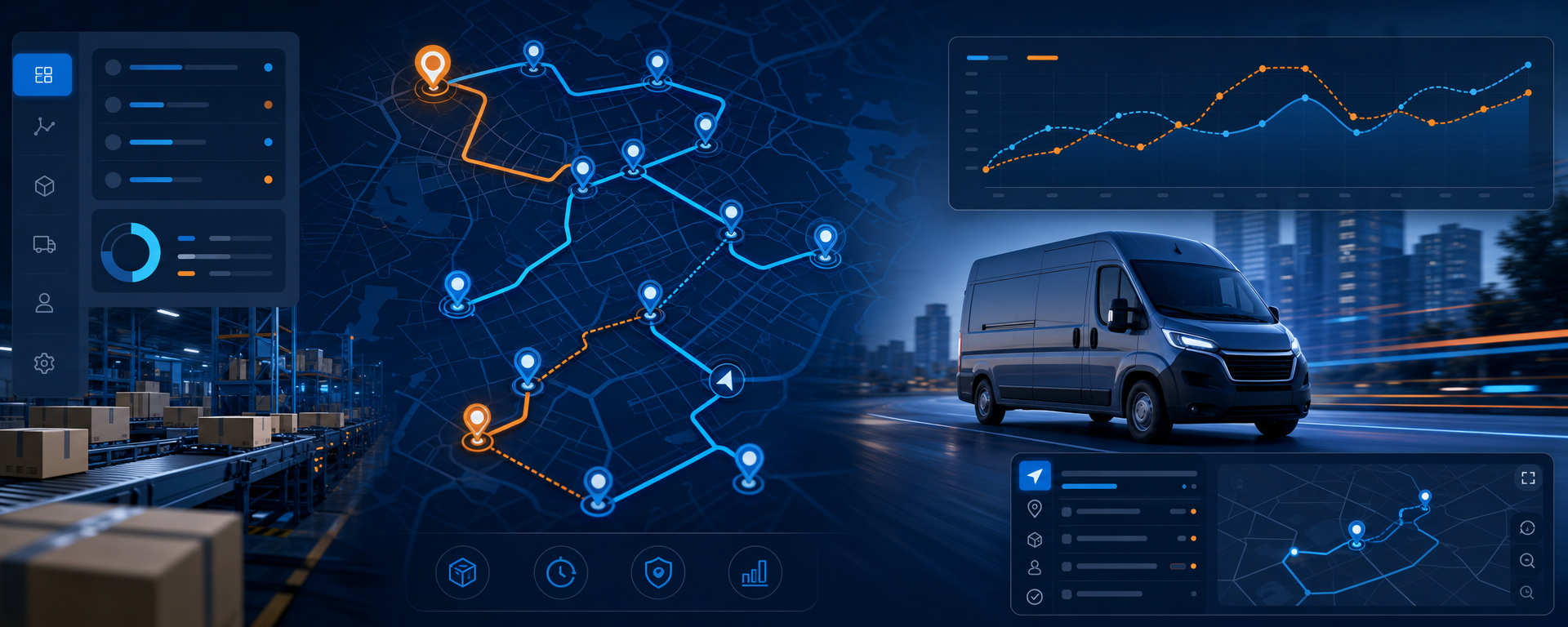
In distribution and regular delivery operations, the challenge is rarely limited to building a route. The sales plan lives in a spreadsheet, the list of outlets in another directory, the driver receives assignments in messages, actual results are recorded after the shift, and management sees deviations too late. DispatchFlow brings these stages together in one digital process on Sapphire.
DispatchFlow is an optional industry solution, not a mandatory component of the platform's base delivery. It can be introduced where the business needs routes, deliveries to outlets, planned quantities, returns, documents, and regular management reporting. The module uses Sapphire's common capabilities: identity, role-based access, administration interfaces, localization, and governed AI tools.
A unified operational model
The solution is based on directories of products, retail outlets, routes, and team members. Instead of repeatedly copying the same lists, a dispatcher works with consistent entities. For recurring geography, route templates can be created with ordered outlets and a driver assignment, then used when preparing the plan for a specific date.
The planner defines the composition of runs, includes the required outlets, assigns responsible employees, and enters product quantities. For a large plan, a tabular workspace provides the entire outlet-by-product matrix. Only changed values are saved, while revision control prevents one employee from unknowingly overwriting another employee's changes when both are editing the same plan.
Data from legacy spreadsheets can be transferred into the structured framework after validation and normalization. This matters during implementation: the organization does not start with an empty system, but the old file also does not become a permanent hidden source of truth. After migration, the plan follows the normal review and publication stages.
Draft, publication, and execution
While a plan remains a draft, the dispatcher can adjust route composition, outlets, and quantities. After publication, its composition is fixed for execution. If a substantial restructuring is needed, the date is returned to preparation mode, the changes are reviewed, and the plan is published again. This separation protects the driver from an assignment changing in the background without a clear status.
The driver works in a focused workspace and sees only assigned, published routes. Within a route, the workspace shows the sequence of outlets, planned items, fields for entering actual results, returns, and related documents. Direct access using another record identifier does not broaden permissions: scope is determined by the account and its assignment in the system.
At an outlet, the employee records the actual delivered quantity and any return, then completes the stage. A route can be completed only after the required validations have passed. The statuses of the route, stops, plan, and documents are consistent with one another, so management receives a structured process state rather than a subjective comment that the run is almost finished.
Documents and traceability
DispatchFlow generates documents from execution data, assigns stable numbers, and retains information about who generated them and when. The printable presentation is localized and takes text direction into account. This provides a basis for consistent document issuance without manually transferring rows from the plan into a separate template.
Operational actions are recorded in a journal. A manager can search events and review the sequence of changes: who prepared the plan, when it was published, which decision was made on a recommendation, and how execution changed. The journal is useful not only during a dispute, but also for process improvement because it reveals recurring manual corrections and bottlenecks.
Reporting for different management levels
The workspace dashboard shows active routes and key execution totals. Reports support filters, search, and drill-down by route, outlet, driver, and product. A manager can compare plan with actual results, evaluate returns, identify deviations, and move from a summary indicator to the underlying operations.
Exports in common spreadsheet formats are available for exchange with established management processes. This does not replace the unified system with another file copy: the export serves as a view for analysis or transfer, while the current state remains in DispatchFlow.
Recommendations with a human in the loop
The module can calculate planning suggestions from accumulated plan and actual data as well as calendar factors. Each recommendation includes a rationale and a confidence assessment. It is not applied silently: a manager accepts, edits, or rejects the suggestion, after which an approved version can be transferred into the draft.
This procedure is fundamental to B2B automation. AI helps identify a pattern and prepare a decision more quickly, but responsibility for the plan remains with the designated employee. The decision and its application are also available for subsequent analysis.
When the solution is especially useful
- The company regularly delivers a product range to a network of retail outlets along recurring routes.
- Plan, actual results, and returns are currently consolidated manually from several spreadsheets and messages.
- Drivers need a simple, restricted workspace without access to other drivers' routes or administrative directories.
- Management needs daily visibility into deviations and detail down to a specific outlet or product.
- The organization wants to introduce recommendations gradually while retaining a mandatory manager decision.
The principal value of DispatchFlow is not the automation of a single form, but the continuous connection between stages. A plan becomes an assignment, the assignment becomes a verifiable actual result, the result produces documents and reports, and the history helps improve the next cycle. Thanks to Sapphire's modular foundation, the solution can be added to the corporate environment without requiring logistics functions in projects where they are not needed.